

Our Story
Our transition into Wiltshires in 2002 was driven by necessity after we purchased a bare land, high country block at the base of the Tākitimu Mountains with no woolshed. We began with a 3/4 cross Wiltshire ram which we mated across our Romney breeding ewes. Even after this first cross we noticed the strength of the Wiltshires’ shedding ability as some of the offspring started to lose their belly and neck wool. This gave us the confidence to fully embrace the breed and we began to work towards an independent shedding flock that required little to no input.
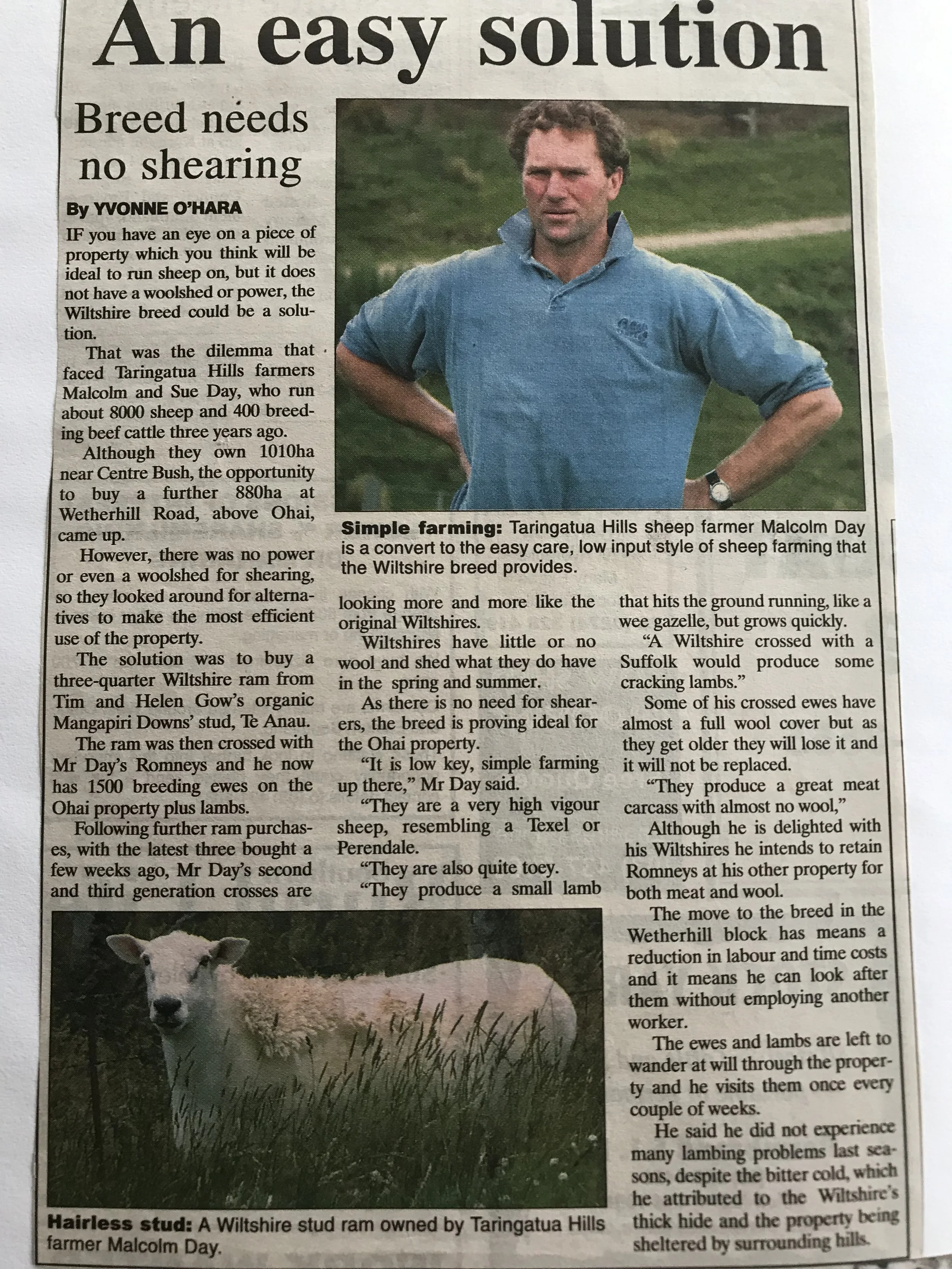
The first step was breeding sheep that shed their wool in summer, eliminating the need for shearing. We soon saw more benefits: no crutching, fewer fly-strikes, and infrequently cast ewes. Their short coat prevented dags, so we stopped tailing. Our discovery, most hard work with sheep comes from managing their wool.
Since there were few Wiltshire breeders available in New Zealand at that time, we made the decision to establish our own stud. This approach proved to be the most cost-effective way to obtain a sufficient number of rams for our ewes, allowing us to build a sheep type that suited our easy care farming operation. At first the progress was slow so we kept our attention on the sheep type, never forgoing sheep constitution for advancements in shedding.

We currently have a 200 strong, fully recorded, Wiltshire Stud flock based on our home farm in South Hillend. As it is still set up to supply our commercial mob with improved genetics we are constantly striving to buy in the best genetics New Zealand has to offer. Our goals as a stud Wiltshire breeder are:
Keeping it simple. Apart from recording, we run our studs in the same manner as our commercial flock as it is paramount that our easy-care sheep remain easy care.
Focused on meat. As shedding sheep are specialised meat animals we put a spotlight on their carcass, closely monitoring weaning weights and Eye Muscle Area scores (EMA).
Sound Feet. Right from the start we found the biggest issue with the breed were poor feet. Any stock with bad feet are immediatly removed from the flock